Plant cell diagram coloring pages
Plant cells are the basic building blocks of plants and contain specialized parts called organelles that help them grow, make food, and store water.
These free printable plant cell diagram coloring pages are a fun way for students to learn about each part of the cell while completing a hands-on science activity. The collection includes labeled diagrams, blank worksheets, and printable PDFs that are ideal for classrooms, homeschool lessons, and independent study.
Looking for animal cells? See our animal cell coloring pages.
Labeled plant cell diagram coloring pages
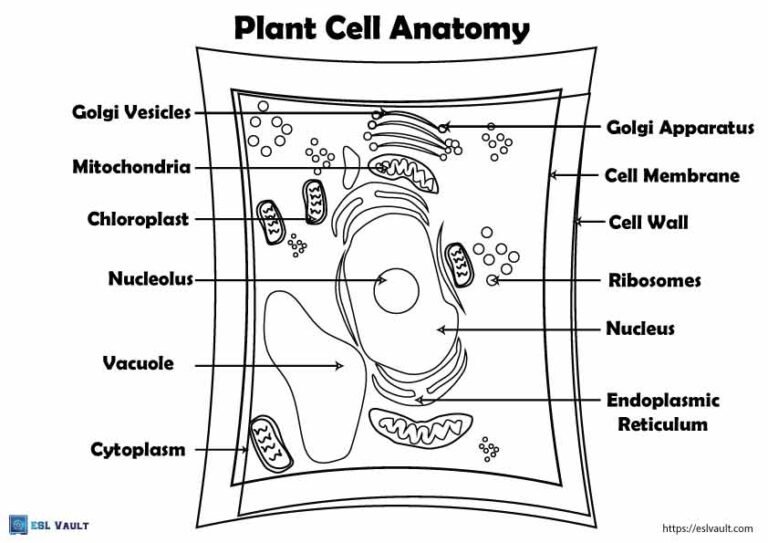
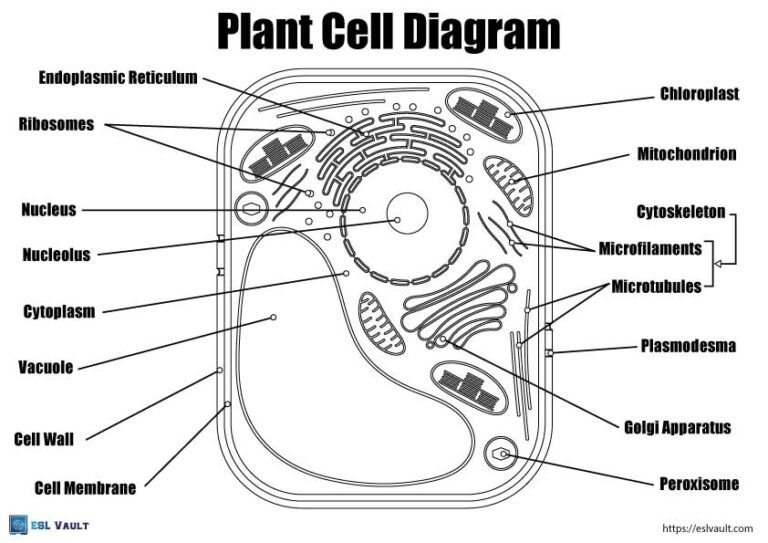
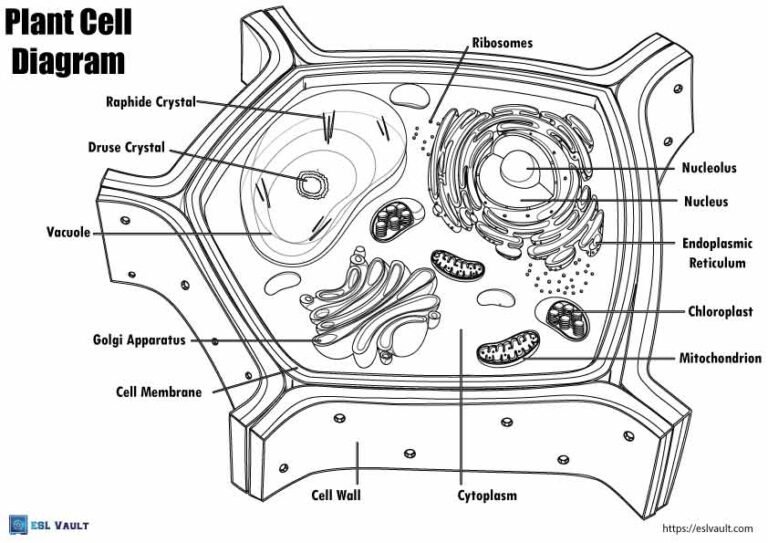
First up we have some free labeled plant cell diagram coloring pages to help students learn the names and locations of the main parts of a plant cell. The printables include clearly labeled organelles, making them useful as a reference for classroom lessons, science projects, and homeschool activities and anyone with an interest in plants and biology.
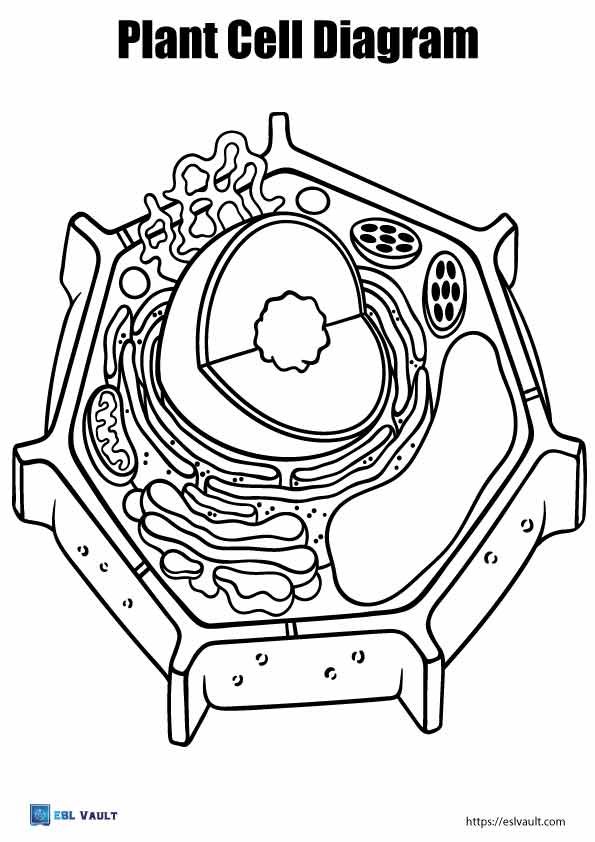
Students can color each organelle while becoming familiar with structures such as the nucleus, chloroplasts, cell wall, vacuole, and mitochondrion. Download the free PDFs below and print as many copies as you need for your classes.
Blank plant cell diagram coloring pages
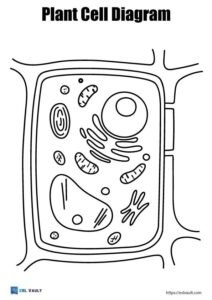
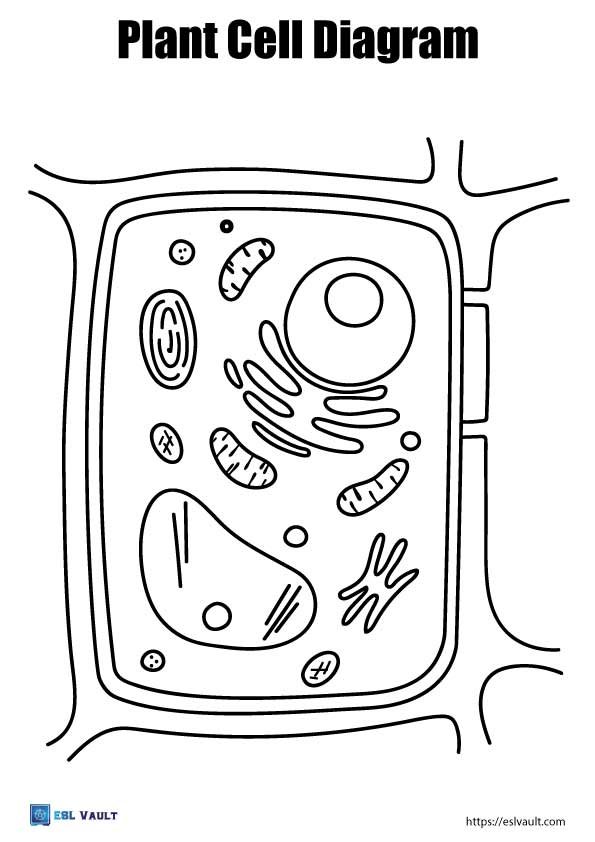
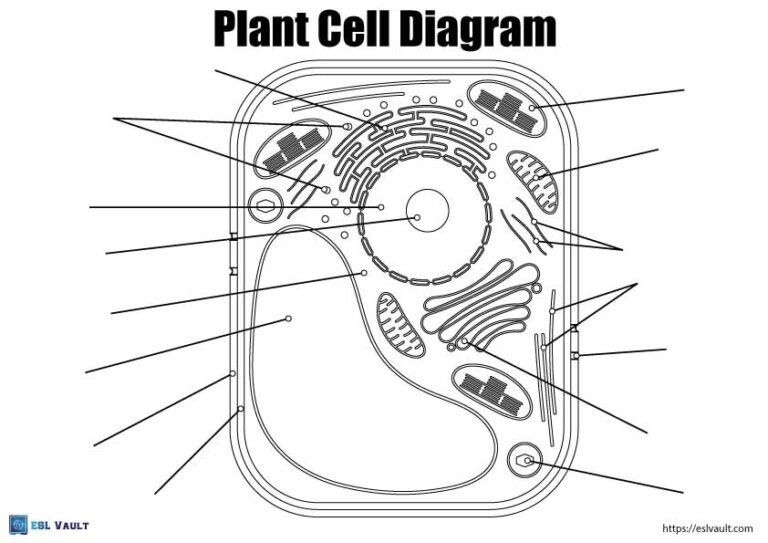
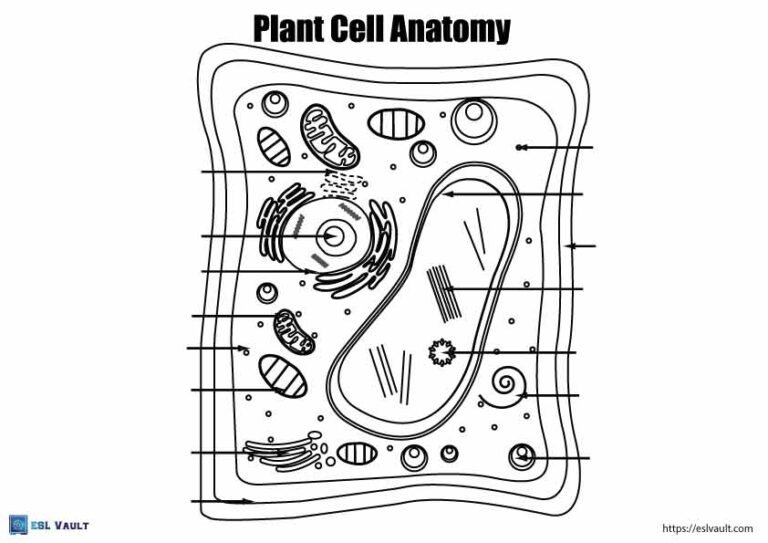
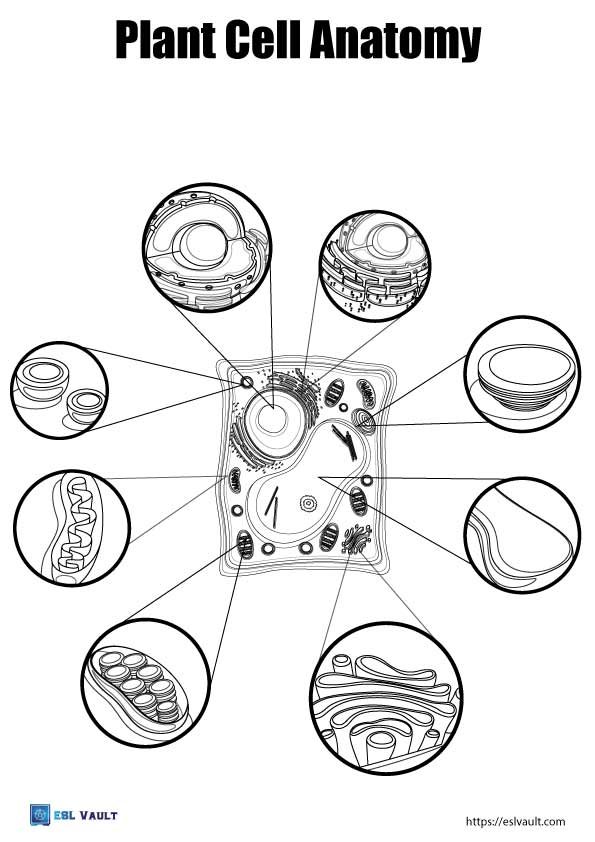
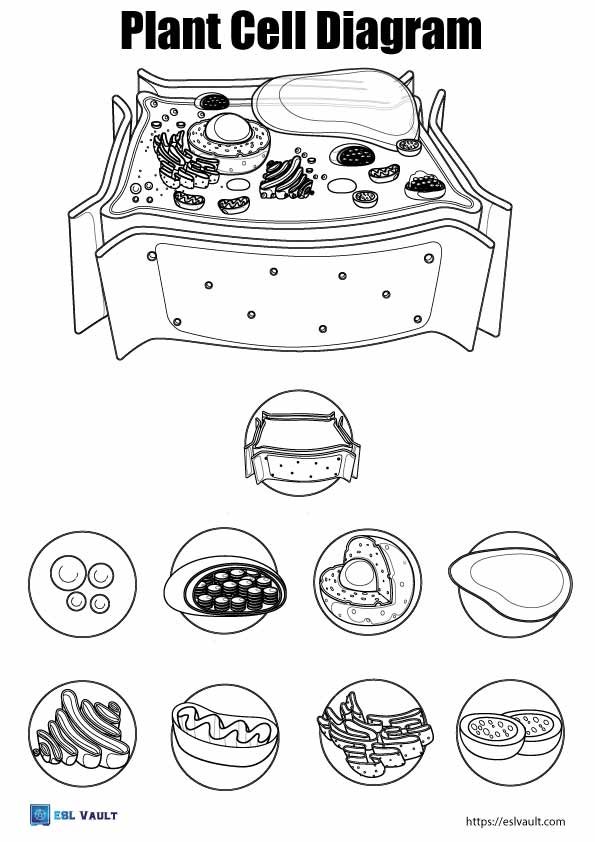
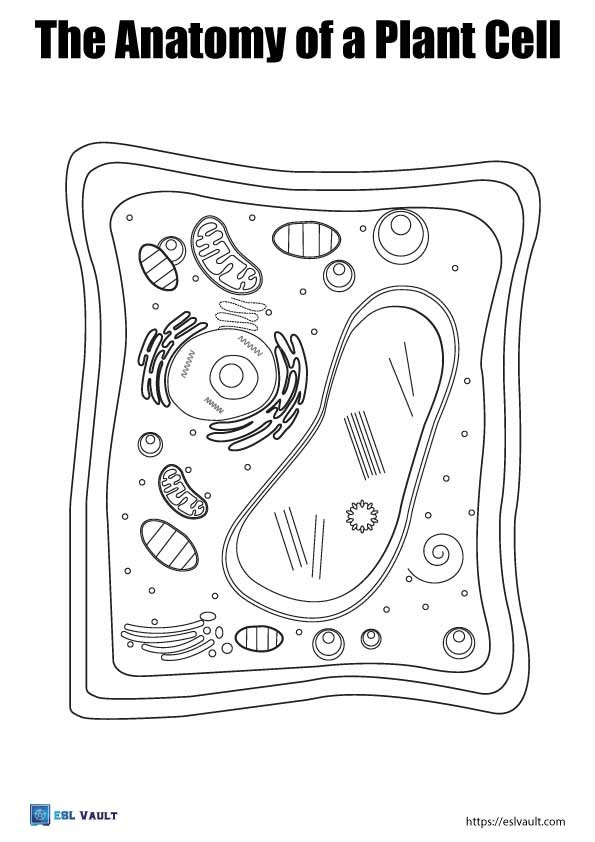
Below are blank plant cell diagrams and worksheets that students can label themselves. Some of them have markers or arrows already drawn in that show which parts of a plant cell are to be named. Other pages do not, which means you can choose the vocabulary you like and make the activities as easy or as hard as you like.
For kids, you may just want to focus on 2-5 words and let them enjoy coloring them in. You can also assign colors for parts. You can either dictate this or write these instructions on the board. For example, the Vacuole is blue, the nucleus is red, the cell wall is purple, and so on.
Remember, there is a very easy plant cell diagram at the top of the page.
Parts of a plant cell
Here is a list of plant cell parts in alphabetical order. A short definition or function of each part has also been provided
Cell Membrane A thin layer that controls what enters and leaves the cell.
Cell Wall A tough outer layer that gives the plant cell support and protection.
Chloroplast An organelle that uses sunlight to make food through photosynthesis.
Cytoplasm A jelly-like substance that fills the cell and holds the organelles in place.
Cytoskeleton A network of tiny fibers that helps the cell keep its shape and move materials.
Druse Crystal Small crystals that help store excess calcium and may protect the plant.
Endoplasmic Reticulum A system of folded membranes that makes and transports proteins and other materials.
Golgi Apparatus An organelle that sorts, packages, and sends materials to where they are needed.
Golgi Vesicles Small sacs that carry materials from the Golgi apparatus to other parts of the cell.
Microfilaments Very thin protein fibers that support the cell and help with movement.
Microtubes Hollow tubes that support the cell and help move organelles during cell division.
Mitochondrion An organelle that releases energy from food for the cell to use.
Nucleolus A small structure inside the nucleus where ribosomes are made.
Nucleus The control center of the cell that contains its genetic material (DNA).
Peroxisome An organelle that breaks down harmful substances and fatty acids.
Plasmodesma A tiny channel that connects neighboring plant cells so they can share materials.
Raphide Crystal Needle-shaped crystals that help protect the plant from animals.
Ribosomes Tiny structures that build proteins needed by the cell.
Rough Endoplasmic Reticulum This is covered with ribosomes and helps make proteins.
Smooth Endoplasmic Reticulum This makes fats (lipids) and helps remove harmful substances.
Vacuole A large storage sac that holds water, nutrients, and waste while helping the cell stay firm.