Things in the ocean
The ocean is huge and covers over 70 percent of planet Earth’s surface. Surprisingly, we don’t know that much about and actually have better maps of the surface of planet Mars! There could be some scary things under the sea that we just aren’t aware of.
This list of things in the ocean includes man-made objects, natural phenomena, geographical features, and general featuresof what the ocean has and consists of.
Some animals have been included, but to list them comprehensively would require another article altogether. Some 200 000 species have been recorded, with many more yet to be found or classified!
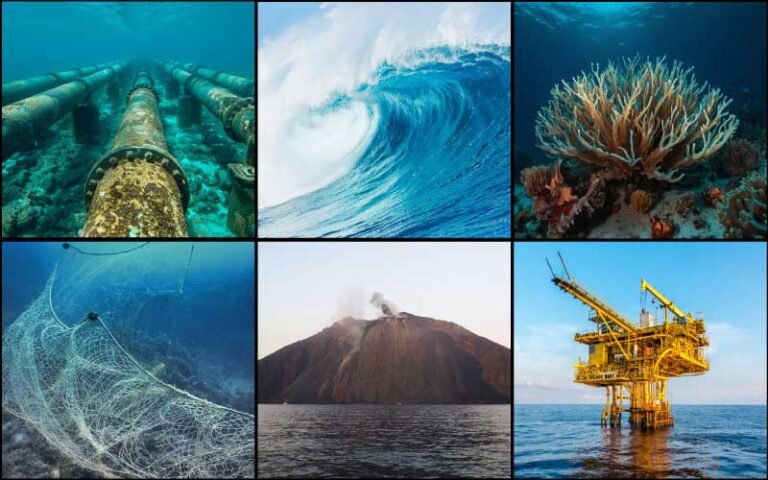
This list is for general interest and can be used for playing category games or just teaching/learning ocean words. There are also pictures below that educators can download as PDF pages to teach about things in the sea.
List of things in the ocean
Abalone – These are actually sea snails, they are known for their delicious meat, and their shells are often used in jewelry.
Acidification
Agate
Aircraft
Aircraft Carriers – The biggest aircraft carrier in the world is the USS Gerald R. Ford, operated by the USA military.
Algae
Amethyst
Anchors
Ancient ruins
Anemones
Anglerfish
Aquamarine – This is a precious stone that comes in blue to green colors.
Archipelagos
Armadas – These are large groups or fleets of military ships.
Art
Artifacts
Atolls
Bacteria
Barnacles
Barracuda
Barrels
Bass
Battleships
Bays
Beaches
Beacons
Bermuda Triangle
Bioluminescense
Birds
Bivalves – These are molluscs such as oysters and clams.
Blobfish
Boats
Bombs
Bottles
Breakwaters
Bream
Buoys
Cables
Calcium
Canyons
Carbon dioxide
Cars
Catamarans
Caves
Cement
Cemeteries
Chains
Cities – There are sunken cities for divers to explore around the globe, including in India, Egypt, Italy, Greece, and more.
Clams
Coasts
Cobalt
Coins
Conches
Continental shelves
Copper
Coral
Coves
Cowrie shells
Crab Traps
Crabs
Craters
Crocodiles – Known to live in estuaries and coastlines, surprisingly, they swim 100s of km out into the ocean!
Cruise ships
Crustaceans
Crystals
Currents
Cuttlefish
Darkness
Debris
Depth finders
Diamonds – The ocean houses a large number of seabed diamonds, which commonly surface from underwater volcanic eruptions.
Dingies
Divers
Docks
Dolphins
Driftwood
Drilling rigs
Dugongs
Earthquakes
Ecosystems
Eddies
Eels
Eggs
Estuaries
Fault lines
Ferries
Fins
Fish Farms
Fish Traps
Fishermen
Fishing Lines
Flathead
Fleets
Floats
Foam
Fossils
Frigates
Galleons
Garbage
Gas
Gems
Geysers
Gold – It is estimated that there are 15 to 20 million tonnes of gold in the world’s oceans.
Gravestones
Groupers
Harbors
Headlands
Hooks
Hotels
Hulls
Hydrothermal vents
Ice
Icebergs
Icebreakers
Icicles
Iguanas
Iron
Islands
Isles
Jasper
Jellyfish
Jetskis
Jetties
Kayaks
Kelp
Kelp forests
Krill
Lagoons
Lakes
Larimar
Larvae
Lava
Life Jackets
Lifebuoys – These circular floating rings are used to help save people in the ocean, they are also known as life rings.
Light
Lighthouses
Limestone
Limpets
Lobsters
Lures
Magma
Mammals
Manatees – These animals are often called sea cows because they feed on vegetation such as seagrass.
Mangroves
Manta Rays
Marinas
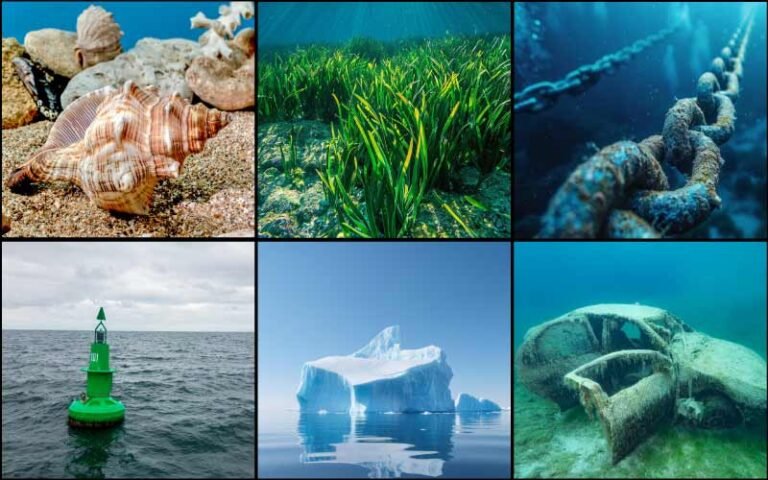
Markers – Markers and buoys help seafarers navigate the oceans safely.
Metals
Military bases
Mine shafts
Minerals
Miners
Minesweepers
Molluscs
Mountains
Mud
Mussles
Narwhals
Naval Mines
Navies
Nets
Nickel
Nitrogen
Nuclear waste
Nutrients
Octopus
Oil
Oil rigs
Oil spills
Oil Tankers
Olivine
Orcas
Otters
Oxygen
Oysters
Parasites
Pearls
Penguins
Peninsulars
Perch
Peridot
Piers
Pipelines
Pirates
Plankton
Plants
Plastic
Plateaus
Pollution
Polyps
Polystyrene
Ports
Pressure
Propellors
Puffer Fish
Pumps
Pyramids – There are underwater pyramids in several parts of the world that appear to be man-made.
Quartz
Rafts
Reefs
Research vessels
Resevoirs
Restaurants
Ridges
Rips
Rivers
Robots
Rocks
Rope
Sailfish
Sailors
Sand
Sand dollars
Sandbanks
Saphires
Scales
Scallops
Sea Cucumbers
Sea glass
Sea lanes
Sea lions
Sea sponges
Sea walls
Seabirds
Seahorses
Seals
Seas
Seaweed
Sediment
Sensors
Serpentine
Sewage
Shale
Shells
Shipping containers
Ships
Shrimp
Silica
Silt
Silver
Sinkers
Sinkholes
Skeletons
Slime
Snails
Snakes
Snorkelers
Soil
Solar panels
Sonar
Sounds
Sponges
Squid
Starfish
Statues
Steam
Storms
Straits
Submarines
Sulfides
Sunken planes
Sunlight
Swells
Swimmers
Tankers
Tarpon
Temples
Tidal turbines
Tidal waves
Tides
Trawlers
Treasure
Trenches – The deepest part of the ocean that we know of is in the Mariana Trench, nearly 11km or over 36 000 feet down in the depths of the sea.
Trevally
Triggerfish
Troughs
Tsunamis
Tuna
Turbines
Turtles
Urchins
Valleys
Vibrations
Volcanoes
Walruses
Water
Waterfalls – Amazingly, the world’s largest waterfall is under the ocean and is situated between Greenland and Iceland.
Waterspouts
Waves
Whale sharks
Whales – The blue whale is the largest animal on the planet and can live for over 100 years!
Whelk
Whirlpools
Whitecaps
Wind farms
Wind surfers
Worms
Wrecks
Yachts
Zinc
Zircon
Related activities
If you found this list of things in the ocean, there are plenty of useful resources here that you may find useful.
There are the 50 ocean conversations questions if you are looking to have a conversation on the topic and perhaps reinforce some of the vocabulary provided here.
There are also 40 ocean animal flashcards that you can download if you want to teach or learn more about sea creatures.
You will also find many different ocean-related coloring sheets and craft activities in those sections of this site. Don’t fear using the search bar function!