
Antique and Vintage Rebus Puzzles
Here we have a collection of interesting historical puzzles that date back to the 1800s and 1900s. Back in the days before television and radio, puzzles were a popular pastime and were published in books, newspapers, and magazines.
These vintage rebus puzzles have both very interesting styles and artwork. They include visual conundrums about sayings and proverbs, as well as themed sets, which are usually the easiest to solve. Old rebuses are also small time capsules. Their clothing, vehicles, and household objects date them at a glance, and many rely on language that has since changed with time.
The puzzles range in difficulty, with some being very easy and obvious, and others being quite challenging. An effort has been made to keep this collection practical in that most people can solve them and that the English language used is not dated for people of this day and age.
If you are unsure how to solve these, check out the main rebus puzzles page, which has a detailed explanation of how to do so. It is a huge collection with puzzles on a whole range of topics and more.
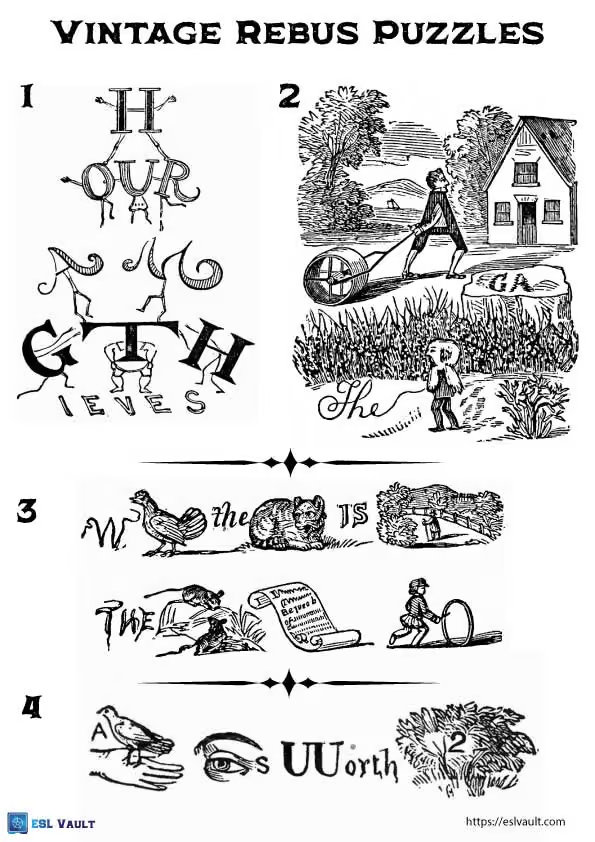
1 – Honor Among Thieves
2 – A Rolling Stone Gathers No Moss
3 – When The Cat Is Away, The Mice Will Play
4 – A Bird In The Hand Is Worth Two In The Bush
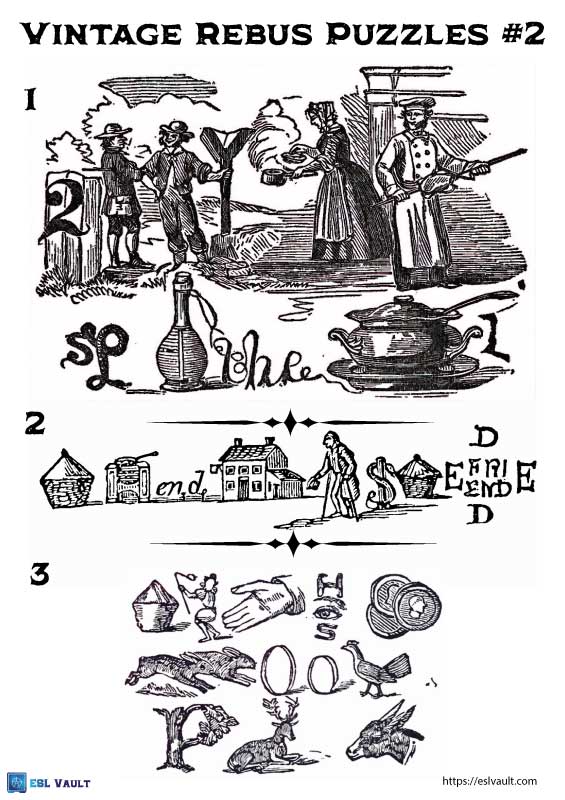
1 – Too Many Cooks Spoil The Broth
2 – A Friend In Need Is A Friend Indeed
3 – A Fool And His Money Are Soon Parted
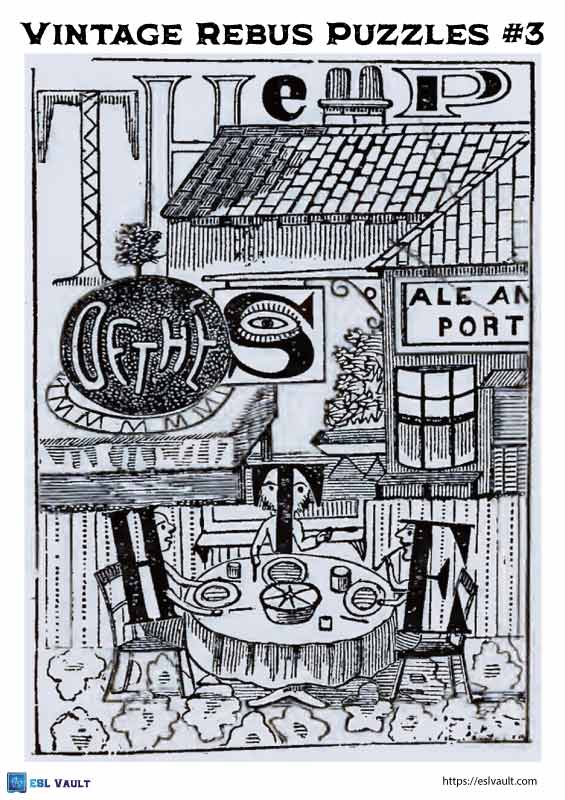
1 – The Proof Of The Pudding Is In The Eating
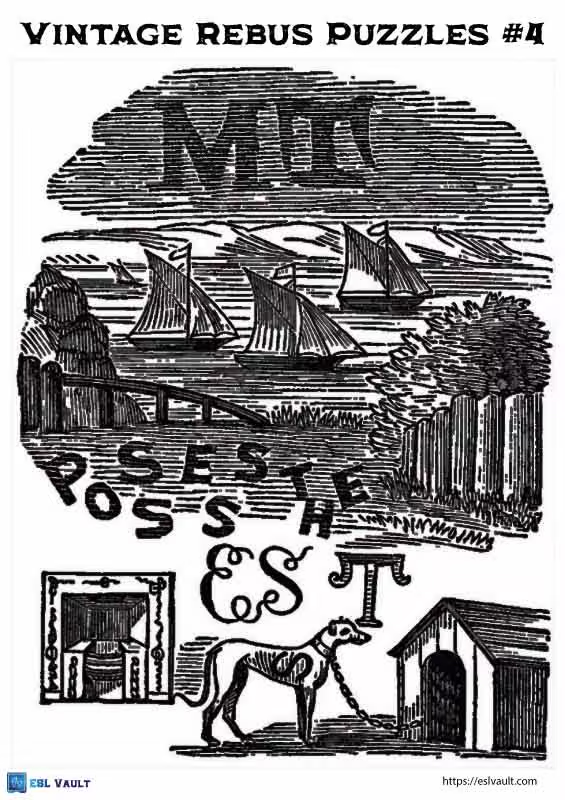
1 – Empty Vessels Possess The Greatest Sound
There was a particular boom in these puzzles late in the 19th century. It was somewhat of a golden age for puzzles, and they were everywhere. The process of engraving on wood, and then later photoengraving on metal plates, made for cheap illustrations that could be mass-produced.
Behind each puzzle there were several hands. Artists drew pictures in pen and ink, and wood engravers cut them into printing blocks, until photoengraving let line art be printed directly. Some businesses bought ready-made puzzle cards and added their own name, while others drew rebuses by hand. People also penned rebus-style letters to each other, as the famous Lewis Carroll did in his letters to children.
Rebuses were used as contests and added to advertisements to keep readers’ attention. Many companies gave away prizes and money to those who solved them correctly. Puzzles then were a slower, more social pastime. A rebus might turn up on a calling card as a flirtation, in a letter from a friend, or in a magazine that made readers wait a month for the answer.
They were often puns that were meant to be groaned at as much as admired. Nobody was racing against the clock in these times. Folks found pleasure in turning a picture over in their heads until the images and sounds all finally clicked together.
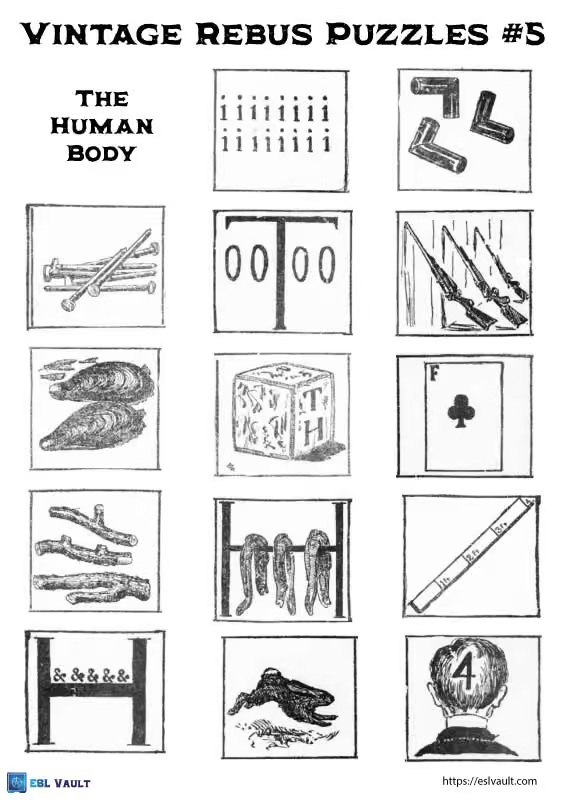
1 – Eyes
2 – Elbows
3 – Nails
4 – Toes
5 – Arms
6 – Muscles
7 – Teeth
8 – Face
9 – Limbs
10 – Heels
11 – Feet
12 – Hands
13 – Hair
14 – Forehead
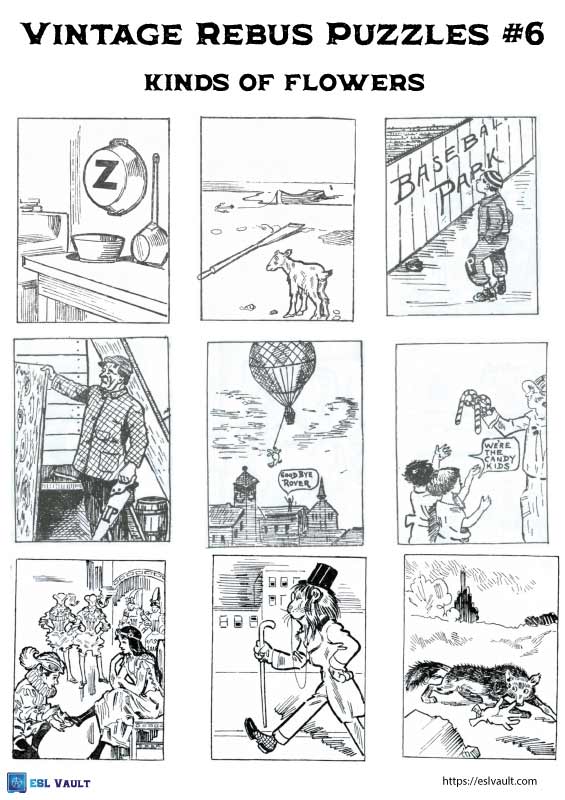
1 – Pansy
2 – Orchid
3 – Peony
4 – Tulip
5 – Dogrose
6 – Sweet Peas
7 – Lady’s Slipper
8 – Dandelion
9 – Foxglove
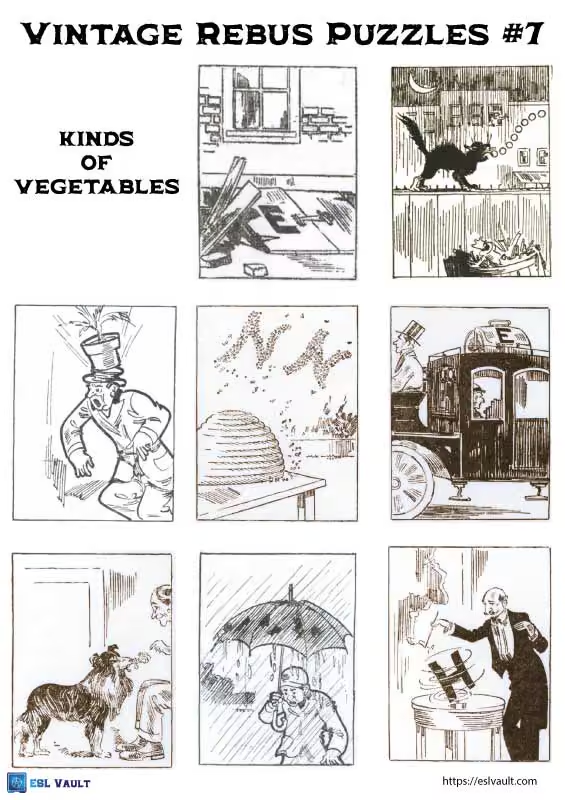
1 – Celery
2 – Tomatoes
3 – Squash
4 – Beans (Bee N’s)
5 – Cabbage (Cab + Bag + E)
6 – Cauliflower
7 – Leeks
8 – Spinach


